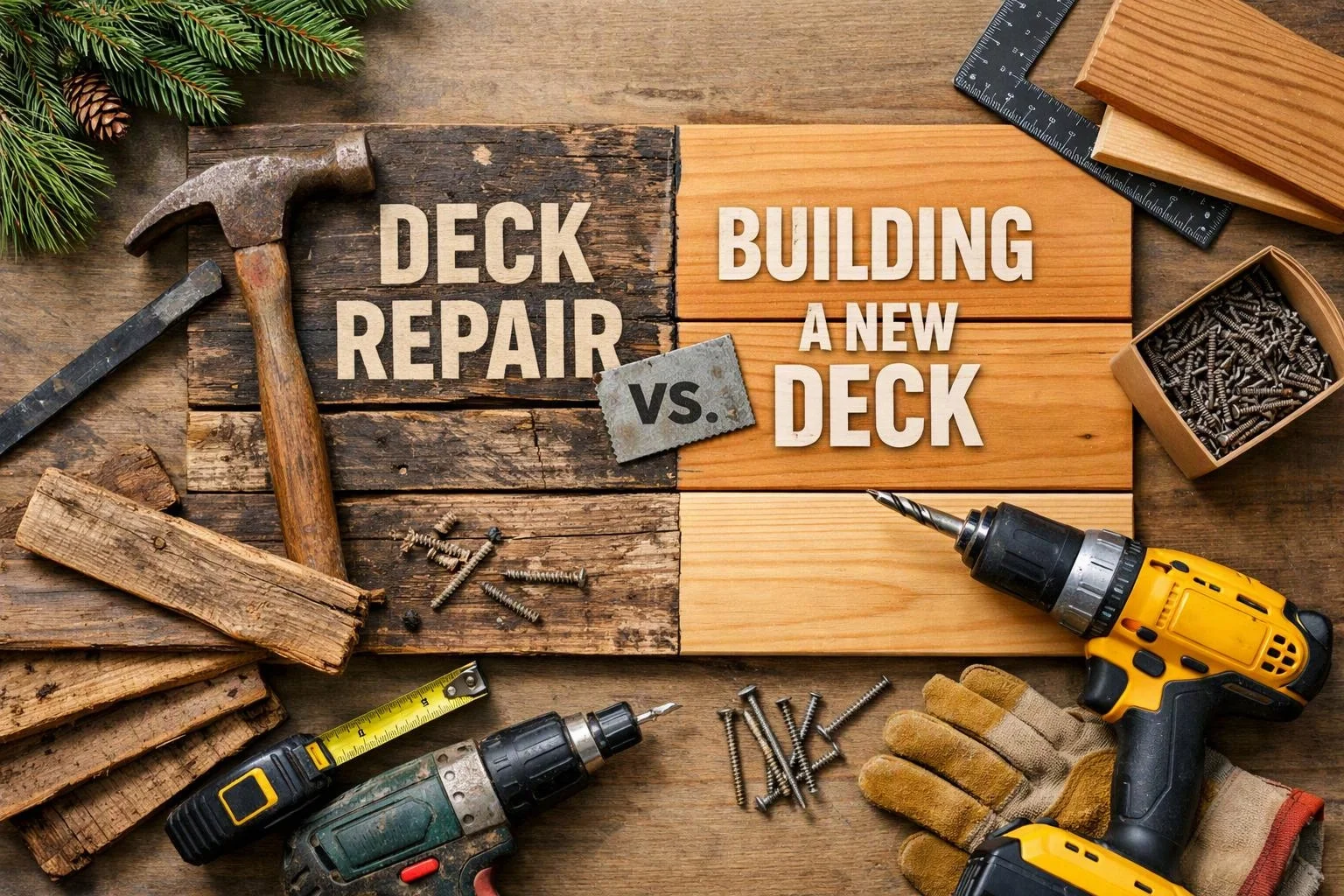
Deck Repair vs. Building a New Deck
Deck repair fits localized damage with a sound frame, while deck replacement fits widespread decay, unsafe structure, or major design changes. HomeRemodelSammamish.info checks the frame, boards, fasteners, layout, and drainage before recommending repair or new deck construction.
Request an EstimateShould You Repair Your Deck or Build a New One?
Deck repair is the better choice when damage is limited and the underlying frame remains sound. Deck replacement is the better choice when decay affects the structure or the deck no longer meets your needs.
Deck safety depends on more than the visible boards. We look for structural damage in the deck framing, unsafe connections, water damage, and movement before choosing a path.
Our Deck Construction team can explain whether a focused repair, deck restoration, or full rebuild fits the condition of your deck.
Quick Picks
Deck repair and deck replacement serve different conditions, so the best choice starts with the structure.
- Deck repair: Best for localized damage, loose boards, and a sound frame.
- Deck replacement: Best for widespread deterioration, unsafe framing, or major design changes.
Deck Repair and Replacement at a Glance
Deck repair usually has a narrower scope, while deck replacement addresses the structure and overall design. The right option depends on damage, access, materials, safety needs, and the project scope.
| Factor | Deck Repair | Deck Replacement | Main Trade-Off |
|---|---|---|---|
| Cost drivers | Localized labor, materials, and access | Demolition, disposal, framing, materials, and site work | Replacement usually has a broader scope |
| Project timeline | Usually a narrower work plan | More planning and construction stages | Scope controls the schedule |
| Maintenance | Keeps the existing design and materials | Can address drainage and material choice | New materials may change maintenance needs |
| Best use case | Sound framing with limited damage | Unsafe framing or widespread deterioration | Safety comes first |
When Deck Repair Makes Sense
Deck repair makes sense when the damage is localized and the deck frame remains sound. Our crew matches the repair to the damaged part, so the work does not expand without a structural reason.
Best for: homeowners who want to preserve a safe layout with limited damage.
When Building a New Deck Makes More Sense
Building a new deck makes more sense when widespread damage or poor design affects safety and use. Replacement lets our team correct hidden problems and plan the complete structure.
Best for: homeowners facing structural decay, unsafe conditions, or major design changes.
What We Check Before Recommending Repair or Replacement
We recommend deck repair or replacement after checking the structure, water exposure, connections, and safety features. Our inspection focuses on both visible damage and areas where water can stay trapped.
We examine the joists, ledger board, posts, beams, and footings for movement, rot, and weak connections. We also check stairs, guardrails, deck boards, fasteners, and deck drainage.
Water damage can spread below the surface, especially near the ledger board, posts, and footings. We explain what we find and connect each recommended task to the project scope.
What Changes the Cost of This Deck Decision?
The cost of this deck decision changes with damage extent, material choice, structural work, access, stairs, railings, and disposal. We use those conditions to build a clear deck estimate.
Deck size affects the amount of material and labor. Framing condition determines whether we can preserve the existing structure or need broader deck construction.
Composite decking and wood decking also bring different material and maintenance needs. Site access, demolition, disposal, footings, stairs, and railings can add work to the project scope.
Requesting an estimate gives you a job-specific answer. We explain the recommended work, included materials, preparation, and exclusions.
What We Include in a Deck Estimate
Our estimate explains the recommended scope, materials, structural work, preparation, and project exclusions. We connect the estimate to what we see during the site assessment.
How to Compare Deck Repair and Replacement Proposals
Compare proposals by matching the included scope, materials, structural work, preparation, and exclusions. A lower total can reflect a narrower scope, so the details matter.
Check whether each proposal covers site preparation, demolition, disposal, and inspection requirements. Review material specifications for deck boards, fasteners, railings, stairs, and framing.
Ask how the proposal handles hidden rot, damaged footings, water damage, and structural corrections. Clear project exclusions help prevent confusion when site conditions change.
How We Plan the Next Step for Your Deck
We review the deck condition with you, explain the repair or replacement path, and prepare a clear project scope. Our team uses the inspection findings to separate surface work from structural work.
A deck consultation can cover repair planning, material choice, deck drainage, maintenance needs, and design changes. If new deck construction is the right path, we outline the layout, preparation, and structural work.
Our goal is a decision based on condition and use, not appearance alone. You receive a practical plan for deck repair or deck construction.
Questions About Deck Repair and Replacement
Can a deck be repaired if the boards are rotting?
Yes, deck boards can be repaired when the underlying frame remains sound. We check nearby joists, fasteners, drainage, and water damage before recommending board replacement.
Is it worth repairing an old deck?
Yes, deck repair can make sense when damage is limited and the structure remains safe. Widespread rot, unstable framing, or poor layout can make deck replacement the better choice.
What signs mean a deck needs to be replaced?
Widespread rot, unsafe framing, foundation movement, unstable railings, and major layout problems can signal the need for replacement. We inspect the joists, ledger board, posts, beams, footings, stairs, and connections before deciding.
Can you replace deck boards without rebuilding the frame?
Yes, we can replace deck boards without rebuilding the frame when the joists, ledger board, beams, posts, footings, and fasteners remain sound. We check the frame first because new boards cannot correct unsafe structural damage.
Use our deck consultation to discuss the condition, material choice, and project scope.