Basement Moisture Warning Signs to Check Before Remodeling
Basement moisture signs include musty odors, wall stains, white residue, peeling paint, soft flooring, and damp surfaces. HomeRemodelSammamish.info checks these conditions before basement remodeling so moisture problems can be addressed before drywall installation.
Request an Estimate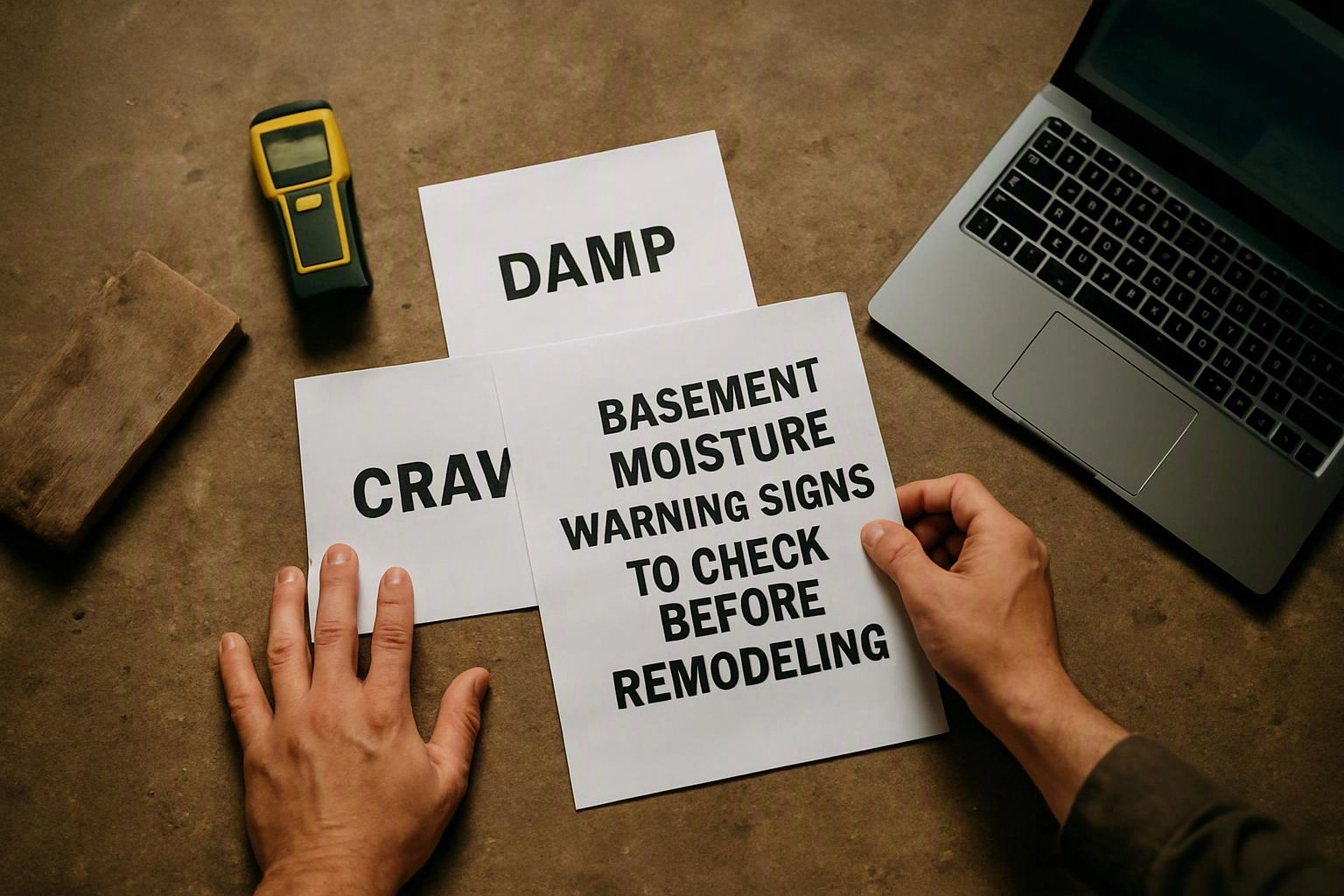
Why Basement Moisture Must Be Checked Before Remodeling
Basement moisture should be addressed before remodeling because enclosed walls and new finishes can hide continuing water damage.
Moisture can weaken drywall, flooring, insulation, and wood framing. It can also support mold growth when damp materials remain enclosed.
Our team checks the moisture source before we plan basement remodeling, drywall installation, or new flooring. This approach helps keep hidden leaks and water damage from becoming part of the finished room.
For broader planning, our Basement Remodeling service considers the room’s structure, finishes, and moisture risks together.
Basement Moisture Warning Signs at a Glance
Basement moisture signs point to different water or humidity conditions, so each sign needs its cause checked before remodeling.
A single sign can have more than one possible cause. Our moisture assessment looks at the full pattern across walls, floors, finishes, and air.
| Warning sign | What it may indicate | Remodeling concern |
|---|---|---|
| Musty odor | Damp materials or hidden water damage | Poor basement air quality and possible mold growth |
| Water stains | Past or active water entry | Paint and drywall may fail again |
| White residue | Moisture movement through masonry | New coatings may trap moisture |
| Peeling paint | Trapped moisture behind the wall coating | Surface preparation and repair are needed |
| Bubbling drywall | Wet drywall or water intrusion | Drywall installation may need to wait |
| Spongy flooring | Moisture damage below the finish | The subfloor may need repair or replacement |
| Condensation | Indoor humidity meeting cold surfaces | Finishes may stay damp after installation |
| Damp surfaces | Surface dampness or ongoing water entry | Materials may not bond or dry correctly |
Mistakes to Avoid Before Finishing a Damp Basement
Basement remodeling mistakes often happen when visible damage is treated as a finish problem.
Our moisture inspection connects stains, odors, damaged drywall, and flooring problems to possible water intrusion. That review helps set the right remodeling scope and protects new materials.
Mistake: Covering Water Stains With New Paint
Covering water stains with paint can hide the mark without stopping the leak.
Ceiling stains and wall stains may come from active leaks, plumbing problems, or water moving through the structure. The cost of this mistake includes repeated stain repair and possible damage to new paint or drywall.
Our fix is to trace the moisture source, check the affected surface, and prepare the area before painting. Active leaks need attention before finish work continues.
Mistake: Ignoring a Musty Basement Smell
A musty odor can indicate damp materials or hidden water damage.
The smell may come from wet insulation, wood, carpet, or other materials that stay damp. Ignoring it can allow mold growth and reduce basement air quality.
The cost depends on which materials hold the odor and how much access the inspection requires. Our fix is to locate the damp materials, address the moisture source, and include needed removal or repair in the scope.
Mistake: Treating White Residue as Ordinary Dirt
White residue on a basement wall can be efflorescence, which forms when moisture carries minerals through masonry.
Efflorescence often appears as a white powder on a masonry wall. It can show that moisture movement or water vapor is reaching the surface.
Painting over the residue may lead to coating failure and repeated cleanup. Our fix is to assess the wall, identify the moisture path, and choose surface preparation that suits the condition.
Mistake: Installing Drywall Against a Damp Wall
Drywall installation against a damp foundation wall can trap wall moisture behind the finish.
Trapped moisture can damage drywall, framing, insulation, and fasteners. It can also create conditions that support mold growth.
The cost depends on the wall area, damaged materials, access, and required preparation. Our fix is to assess the foundation wall and framing before selecting materials and installing drywall.
Mistake: Painting Over Peeling or Bubbling Finishes
Peeling paint and bubbling paint show that the wall coating may not be bonded to a sound, dry surface.
Trapped moisture can push a wall coating away from the surface. New paint will not correct the moisture problem or replace missing surface preparation.
Our fix is to remove loose material, check the surface, and complete proper surface preparation. The remodeling cost changes with the coating damage and the finish materials selected.
Mistake: Keeping Spongy or Swollen Flooring
Spongy flooring or swollen flooring can indicate floor moisture below the finish.
Moisture may have affected the subfloor, adhesive, or flooring material. Keeping damaged flooring can create trip hazards and allow damage to spread.
Our fix is to inspect the floor layers and identify material replacement needs. The cost depends on the damaged flooring, subfloor condition, and access for removal.
Mistake: Dismissing Condensation as a Small Problem
Condensation forms when moist indoor air meets cold foundation walls or other cool surfaces.
Indoor humidity, limited ventilation, and cold surfaces can keep a basement damp. Repeated surface moisture can damage finishes even when there is no visible leak.
Our fix is to assess the pattern of surface moisture and include suitable preparation in the remodeling scope. The cost depends on affected finishes and the work needed before installation.
Mistake: Remodeling Before Finding the Water Source
Remodeling before finding the water source can place new finishes over active moisture.
Possible sources include foundation cracks, plumbing leaks, groundwater, and poor drainage. Each source can affect the repair plan and the materials chosen.
Our fix is to review the visible evidence and coordinate the remodeling scope around the moisture source. The cost changes with the source, access, material damage, and finish work.
Mistake: Replacing Damaged Drywall Without Checking Nearby Materials
Drywall repair may fail when nearby wet insulation, wood framing, or baseboards remain damaged.
Hidden moisture can move beyond the first visible area. New drywall can also cover materials that still need drying, removal, or replacement.
Our fix is to inspect nearby materials before closing the wall. The cost depends on the affected area, material replacement, access, and finish installation.
How We Check Basement Moisture Before Remodeling
HomeRemodelSammamish.info checks visible damage, odors, surfaces, flooring, and affected materials before we plan remodeling work.
Our process connects the moisture assessment to the proposed remodeling scope. We document conditions that could affect drywall installation, flooring, and finish materials.
What Changes the Cost of Moisture-Related Remodeling Work?
Moisture-related remodeling cost depends on the affected materials, the moisture source, repair access, and the finish work required.
Drywall repair may involve limited patching or broader removal and replacement. Drywall installation can also require framing changes, insulation work, and careful surface preparation.
The quote should account for material damage, source-related work, removal, disposal, access, and finish materials. We explain these items in the scope of work so the quote matches the actual basement condition.
Request a quote through our Free Consultations option, and we’ll review the moisture findings with the remodeling plan.
When to Call HomeRemodelSammamish.info Before Remodeling
Call HomeRemodelSammamish.info before remodeling when moisture signs affect walls, floors, finishes, or materials you plan to cover.
Some conditions need more than cosmetic work. Our crew can help define the repair and finish scope before new materials hide the evidence.
What to Include in a Basement Remodeling Quote
A basement remodeling quote should identify moisture-related repairs, affected materials, preparation work, new finishes, and the project scope.
Our quote should connect each repair to the condition found during the moisture inspection. That clarity helps you see which work supports drywall repair, drywall installation, flooring, and final finishes.
The scope should address material removal, wet insulation, damaged drywall, wood framing, baseboards, surface preparation, and finish installation where needed. It should also explain how the moisture source affects the planned work.
We use the inspection findings to describe the work before remodeling begins. This keeps the repair plan connected to the finished basement design.
Questions About Basement Moisture Before Remodeling
Can basement moisture damage drywall after installation?
Yes, basement moisture can damage drywall after installation when moisture remains behind the wall or enters from nearby surfaces. Damp framing, insulation, foundation walls, and hidden leaks can all affect new drywall.
Is white residue on a basement wall always a sign of moisture?
White residue on a basement wall often signals moisture movement through masonry, but the surface still needs to be assessed in context. Efflorescence forms when water carries minerals to the wall surface.
Can condensation cause basement remodeling problems?
Yes, condensation can cause basement remodeling problems when indoor humidity repeatedly collects on cold foundation walls or finishes. Surface moisture can damage coatings and keep new materials damp.
What should be included in a basement moisture repair quote?
A basement moisture repair quote should include the moisture source, affected materials, removal, repair, surface preparation, and planned finish installation. Our quote also connects those items to the full remodeling scope.