What can go wrong during hardwood floor refinishing?
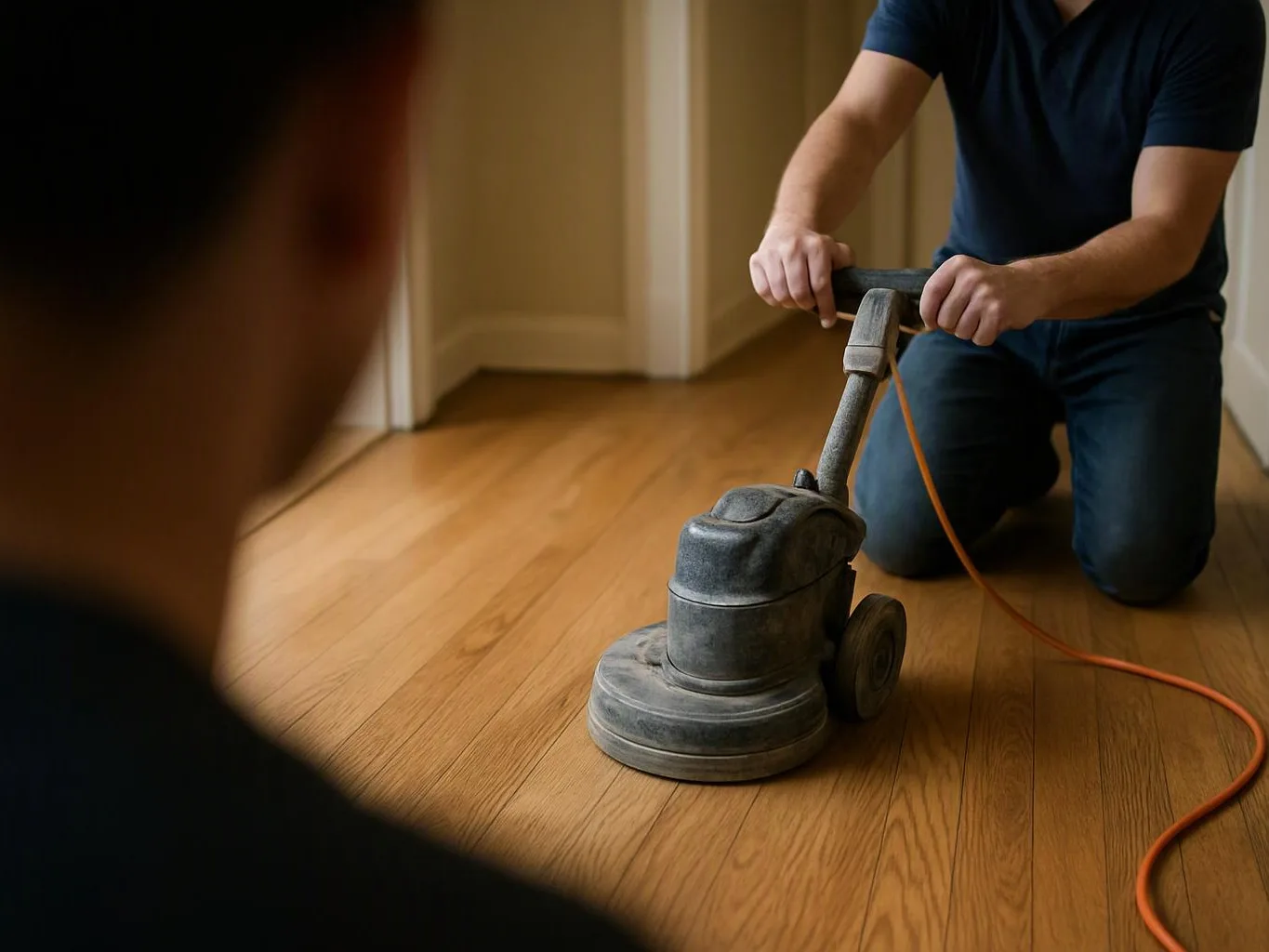
Color variation is a key risk when sanding, wood absorption, or old finish layers differ across the floor. Uneven sanding can leave low areas, while swirl marks may remain visible after finishing. Finish bubbles and dust contamination can also affect the surface. A pre-work inspection helps define what the process can correct.
How does the first assessment shape the refinishing work?
The initial assessment sets the sanding, cleaning, repair, and finish scope. We look at board condition, old coating, stains, surface marks, and room connections. The findings guide the quote and show whether refinishing fits the floor. Deep board damage can require repair or replacement within a larger remodeling plan.
Which part of the property decides the project scope?
The existing hardwood surface decides the core project scope. Room connections, board wear, old finish, stains, and damaged sections affect the preparation needed. Commercial properties can also require access planning around business use. Sharing those conditions early helps us build a quote around the actual floor.
When does sanding fail to solve the floor problem?
Sanding cannot solve missing boards, loose boards, or damage that extends deep into the wood. Surface wear and light finish failure often fit refinishing, but structural board problems need another repair decision. We explain that limit during the inspection so the work scope does not promise a result the floor cannot support.
Why do finish bubbles appear after floor work?
Finish bubbles can appear when air, residue, or surface contamination remains beneath a coating. Dust, uneven preparation, and incompatible old finish can also affect the surface. We check the floor before finishing and discuss the preparation needed. The correct response depends on where the bubbles formed and how deeply they affect the coating.
How should a homeowner compare refinishing contractors?
A homeowner should compare each contractor's inspection method, written scope, preparation details, and explanation of surface limits. Ask how the contractor handles swirl marks, dust, bubbles, and color variation. Licensed and insured general contractor credentials also matter. Clear project planning makes it easier to compare quotes that cover the same work.
What changes the quote for this flooring work?
The quote changes with board condition, sanding depth, old finish, stains, surface repairs, room access, and related remodeling work. Large differences between rooms can add preparation needs. We offer free consultations and use the floor assessment to discuss the actual scope before preparing a quote.