Hardwood Floor Wear: When to Refinish and When to Investigate Further
Hardwood floors usually need refinishing when wear stays on the finish or surface, but replacement or further investigation may be needed for deep damage, moisture problems, or unstable boards. At HomeRemodelSammamish.info, we check the floor’s condition before recommending refinishing or hardwood flooring installation.
Request an EstimateHow to Tell Whether Hardwood Floors Need Refinishing or Replacement
Hardwood floor wear usually indicates refinishing when the damage stays shallow and the boards remain firm. Dullness, light scratches, and a worn floor finish often respond well to sanding, staining, sealing, and a new topcoat.
Deep gouges, split boards, cupping, warping, and loose boards need more investigation. Those signs can point to moisture damage, subfloor movement, or structural damage. We inspect the wood, joints, floor edges, and moisture source before choosing between board repair, replacement, or refinishing.
Hardwood floors are usually candidates for refinishing when damage stays shallow, while widespread board failure or moisture damage requires further investigation. Our guide to Hardwood Floor Refinishing explains how surface preparation and finish selection fit into that decision.
Refinishing or Replacement: What the Floor Condition Shows
Floor condition shows whether the problem is cosmetic, moisture-related, or structural. The comparison below helps separate finish failure from damage that may need board replacement or new flooring.
| Condition | What it may mean | Likely direction |
|---|---|---|
| Dull finish or light scratches | The finish has worn, but the wood may remain sound. | Refinishing may renew the surface. |
| Stains or water marks | The stain may reach below the finish or signal water damage. | Inspect the moisture source before sanding. |
| Deep gouges or split boards | Surface damage may have reached the wood itself. | Board repair or replacement may be needed. |
| Cupping or warping | Uneven moisture may be affecting boards or the subfloor. | Investigate moisture before refinishing. |
| Loose or moving boards | Fasteners, joints, or subfloor movement may be involved. | Correct stability concerns before applying a finish. |
| Widespread board failure | The existing floor may not provide a stable base. | Discuss replacement or hardwood flooring installation. |
Refinishing works best when the boards can support a new finish. New hardwood flooring installation becomes more suitable when the existing floor cannot offer lasting stability.
Common Hardwood Refinishing Mistakes That Hide Bigger Problems
Hardwood floor inspection should come before the refinishing decision. Sanding can improve surface damage, but it can't correct an active moisture source, unstable boards, or subfloor movement.
We review the floor finish, wood condition, board stability, and moisture history. That process helps prevent rework and keeps refinishing within its proper limits.
Mistake: Sanding Before Checking for Moisture
Moisture damage can continue beneath a new finish if leaks or damp materials remain. Cupping and warping may return after sanding when the moisture source has not been corrected.
We inspect for water stains, soft areas, and changes in board shape before planning sanding. The correction may include moisture investigation, drying, repair, and a revised refinishing plan. The added work comes from correcting the cause and preparing the floor again.
Mistake: Treating Cupped or Warped Boards as Surface Wear
Cupping and warping change the shape of the wood, so they are not simple finish problems. Moisture may have entered through the floor, subfloor, edges, or an unnoticed leak.
We trace the moisture source and review the subfloor before deciding on board replacement. The cost impact comes from moisture correction, subfloor preparation, and the amount of damaged wood that needs repair.
Mistake: Refinishing Over Deep Gouges and Split Boards
Deep gouges and split boards can remain visible after sanding. A new finish may seal the surface, but it cannot restore missing or broken wood.
We assess whether board repair can restore the area or whether replacement boards are needed. The added work depends on matching the wood, removing damaged sections, and blending the repaired area with nearby boards.
Mistake: Ignoring Loose, Squeaking, or Moving Boards
Loose boards and squeaky floors can show subfloor movement or weak connections. A finish cannot solve movement that continues beneath the wood.
We check floor stability before surface preparation. The correction may involve securing boards, addressing subfloor movement, or revising the installation plan. The work added to the project depends on the source and location of movement.
Mistake: Removing Too Much Wood During Sanding
Engineered hardwood has a wood wear layer above its core, while solid hardwood has a different thickness profile. Sanding must suit the remaining floor thickness and the condition of that wear layer.
We review the floor type and past sanding evidence before recommending refinishing. The correction may be a lighter renewal process, board repair, or replacement when the floor no longer has suitable sanding depth.
Mistake: Choosing a Finish Without Considering Daily Use
Floor finish should match the room’s traffic, pets, furniture, and maintenance habits. Sheen also affects how clearly scratches, dust, and surface wear appear.
We discuss finish selection before sealing and applying the topcoat. The project may need more preparation when the existing finish fails or when the chosen finish requires a different surface condition.
Mistake: Matching Only the Color and Not the Board Profile
Replacement boards must match more than stain color. Wood species, board width, grain pattern, thickness, and edge shape affect the final appearance.
We compare replacement boards with the existing wood before staining. The added work comes from sourcing a close match, shaping the repair, and blending the wood grain with nearby floorboards.
Mistake: Refinishing Without Planning Dust and Curing Needs
Floor preparation creates dust, and finish curing affects room access and project planning. Poor preparation can leave debris in the finish or create avoidable rework.
We plan dust control, room access, surface preparation, and finish curing before work begins. The project scope changes when furniture movement, protection, or additional cleaning is needed.
What Each Refinishing Mistake Costs and How We Fix It
Refinishing mistakes can create rework, material waste, and additional preparation. The total quote depends on the actual floor condition, not just the visible finish.
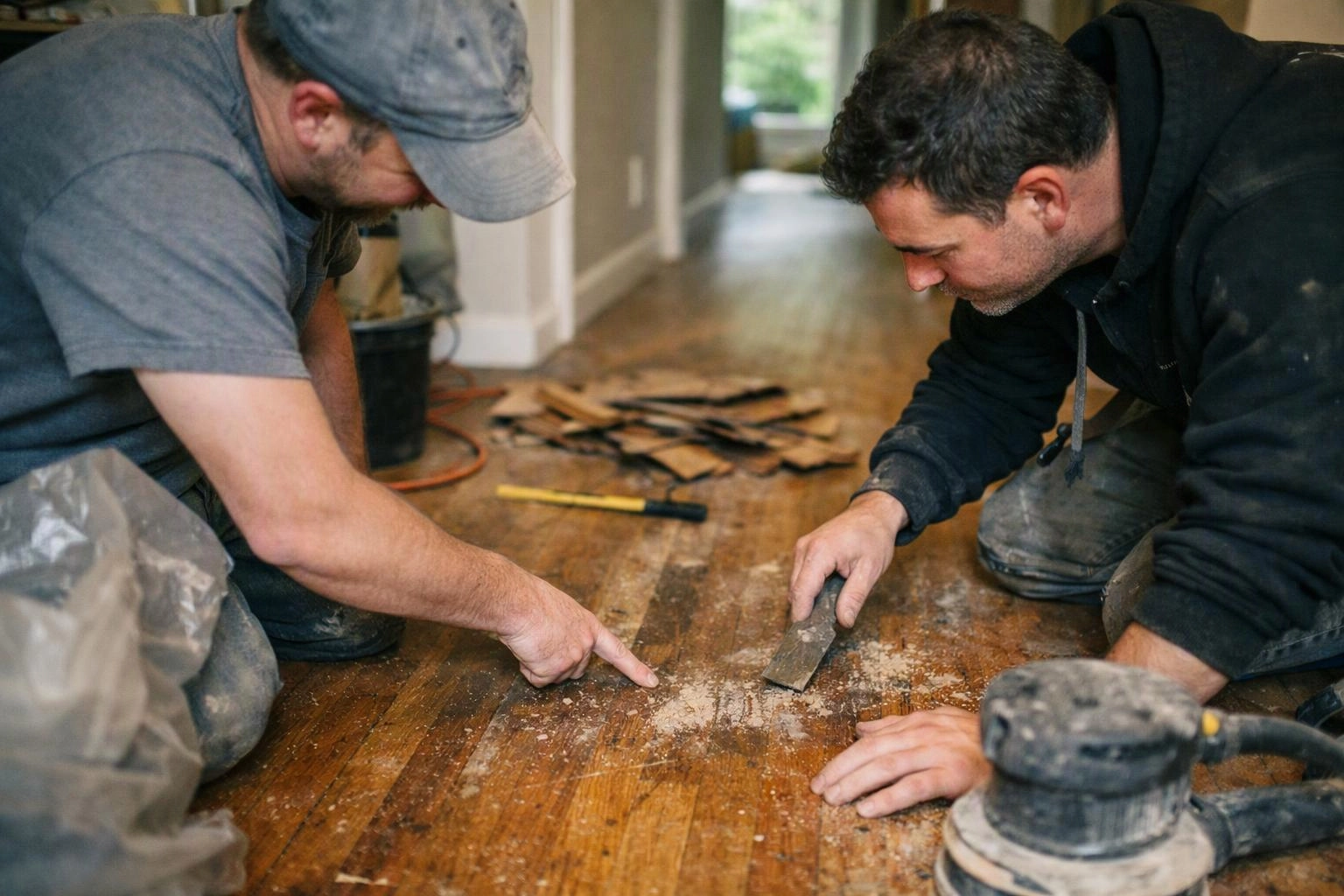
We separate the work into surface preparation, moisture correction, board repair, board replacement, and hardwood floor refinishing. That approach shows which steps are required and helps prevent a cosmetic repair from hiding a larger problem.
Requesting a quote from us starts with a review of the room, floor type, damage, and desired finish. Our team can then explain the practical scope for refinishing or new flooring.
When You Should Call HomeRemodelSammamish.info
Call us when the floor shows signs that may involve moisture, board failure, or unstable flooring. We can inspect the condition and explain whether refinishing remains suitable.
Our team can inspect the floor before you commit to sanding or board replacement. If climbing, heavy furniture movement, or other work feels unsafe, contact us for help.
How We Decide Between Refinishing and New Hardwood Flooring
We recommend refinishing when the boards remain sound and the damage is mainly in the finish or surface; we discuss new hardwood flooring when boards cannot provide a stable, lasting result.
Our floor inspection reviews wood condition, floor type, board stability, moisture history, and subfloor concerns. We also look at board repair options before recommending replacement.
Solid hardwood may allow different repair and sanding options than engineered hardwood. When repair limits are reached, our team can explain the scope for hardwood flooring installation and how replacement flooring should connect with nearby rooms.
What to Include When Requesting a Hardwood Floor Quote
A useful hardwood floor quote starts with clear information about the room and the damage. These details help us plan the right inspection and explain the project scope.
We use these details to prepare a quote that reflects the floor’s actual condition. A clear scope helps separate cosmetic renewal from moisture correction or hardwood flooring installation.
Questions About Hardwood Floor Wear and Refinishing
Does hardwood floor refinishing remove deep stains?
Hardwood floor refinishing may reduce some stains, but deep stains can remain below the finish. We inspect the stain before sanding and explain whether board repair or replacement is more suitable.
Can engineered hardwood floors be refinished?
Engineered hardwood floors can sometimes be refinished when the remaining wear layer supports the work. We check the floor thickness, past sanding, and surface condition before recommending refinishing.